

Gear Guides
What Size Lacrosse Goal Do You Need for the Backyard?
By Christian DiMonda · · Updated
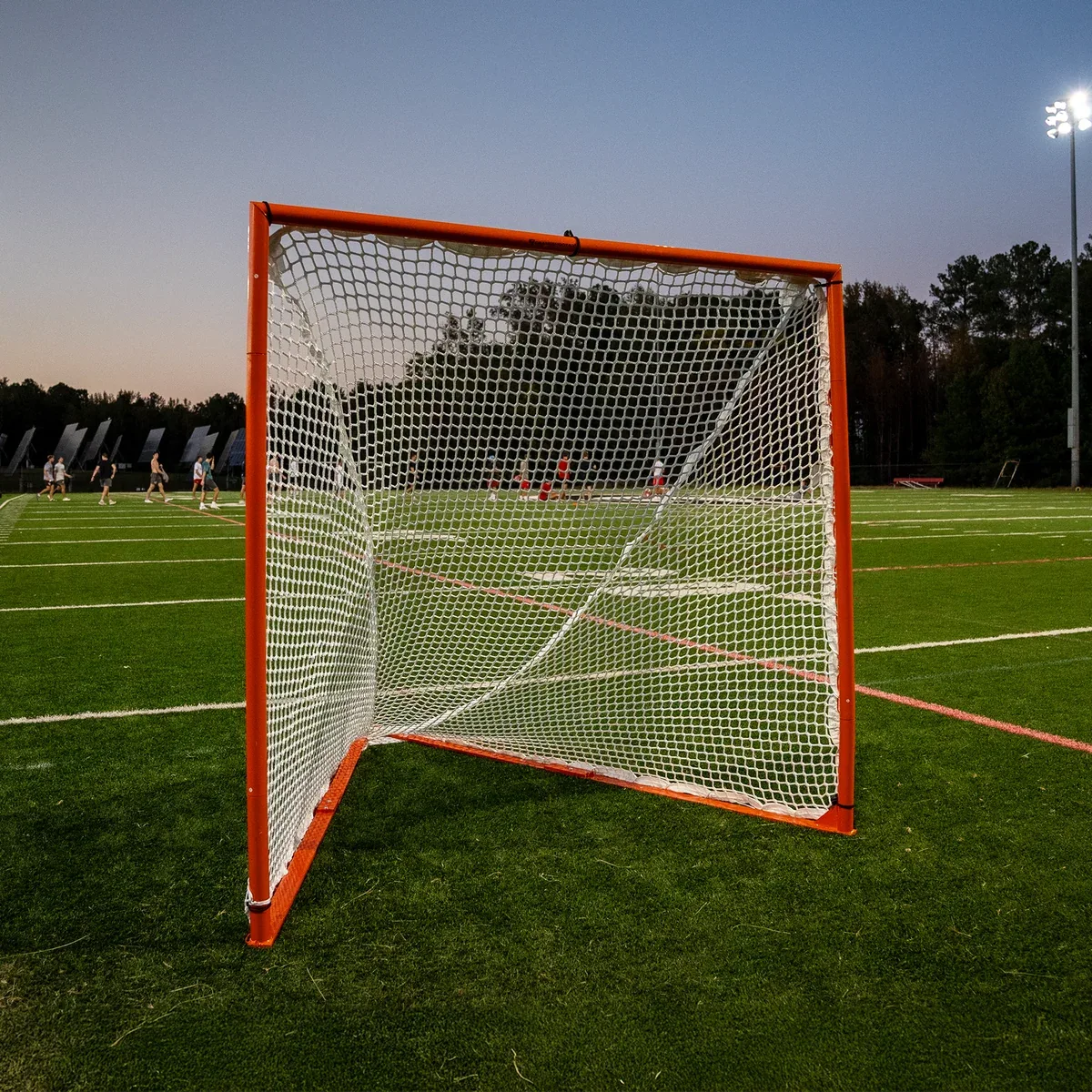
Every parent buying a first lacrosse goal runs into the same question: do I need the full-size one?
Short answer: regulation is 6 feet wide by 6 feet tall by 7 feet deep. That's what your player will shoot on in every game they ever play. But "regulation" and "right for your yard" aren't always the same thing.
The sizes you'll actually see
6'x6' — regulation. The default recommendation for anyone 10 and up, and for any family that plans to keep playing. Your player learns real shooting angles and a real target. Goalies learn the actual cage they'll defend.
4'x4' — small-sided. Good for younger players (roughly 6–9), tight yards, and shooting accuracy work. Smaller target means tighter shots. The tradeoff: your player's aim is calibrated to a goal they'll stop using.
3'x3' and smaller — accuracy targets. These aren't really goals. They're training tools, and they're excellent at that job. They're not a substitute for a cage.
Box goals — 4'x4'x5'. If your player is in a box program, this is the cage they'll see. Different game, different goal.
How to choose in about thirty seconds
Ask two questions.
How old is your player, and how long will they play? If there's a realistic chance they're still playing in three years, buy the 6'x6'. Parents who buy small almost always end up buying twice. A goal that gets used for six seasons is cheap. A goal that gets replaced after one isn't.
How much yard do you have behind the goal? This matters more than the goal itself. A 6'x6' goal needs 15–20 feet of clear space behind it, or every miss is in your neighbor's hydrangeas. If you don't have that, you need a backstop net more than you need a smaller goal.
The thing most people get wrong
It isn't the size. It's the net.
Nets are rated by thickness in millimeters — typically 4mm, 5mm, 6mm, and 7mm. A 4mm net is fine for a young player doing light shooting. It is not fine for a 15-year-old with a real shot, and a blown-out net in March is a frustrating way to learn that.
If your player is in high school or hits hard, start at 6mm or 7mm. The cost difference is small. The difference in how long it lasts is not.
What we'd tell a parent buying their first goal
Get the 6'x6'. Get a heavier net than you think you need. Add a backstop if your yard is tight or your player is still learning where the ball goes.
Then get out of the way. The goal isn't the thing that makes them better — the reps are. The goal just means the reps happen in your yard instead of at practice twice a week.
Browse lacrosse goals and replacement nets.