

Gear Guides
Store It Right: The Ten-Minute Off-Season Gear Routine
By Christian DiMonda · · Updated
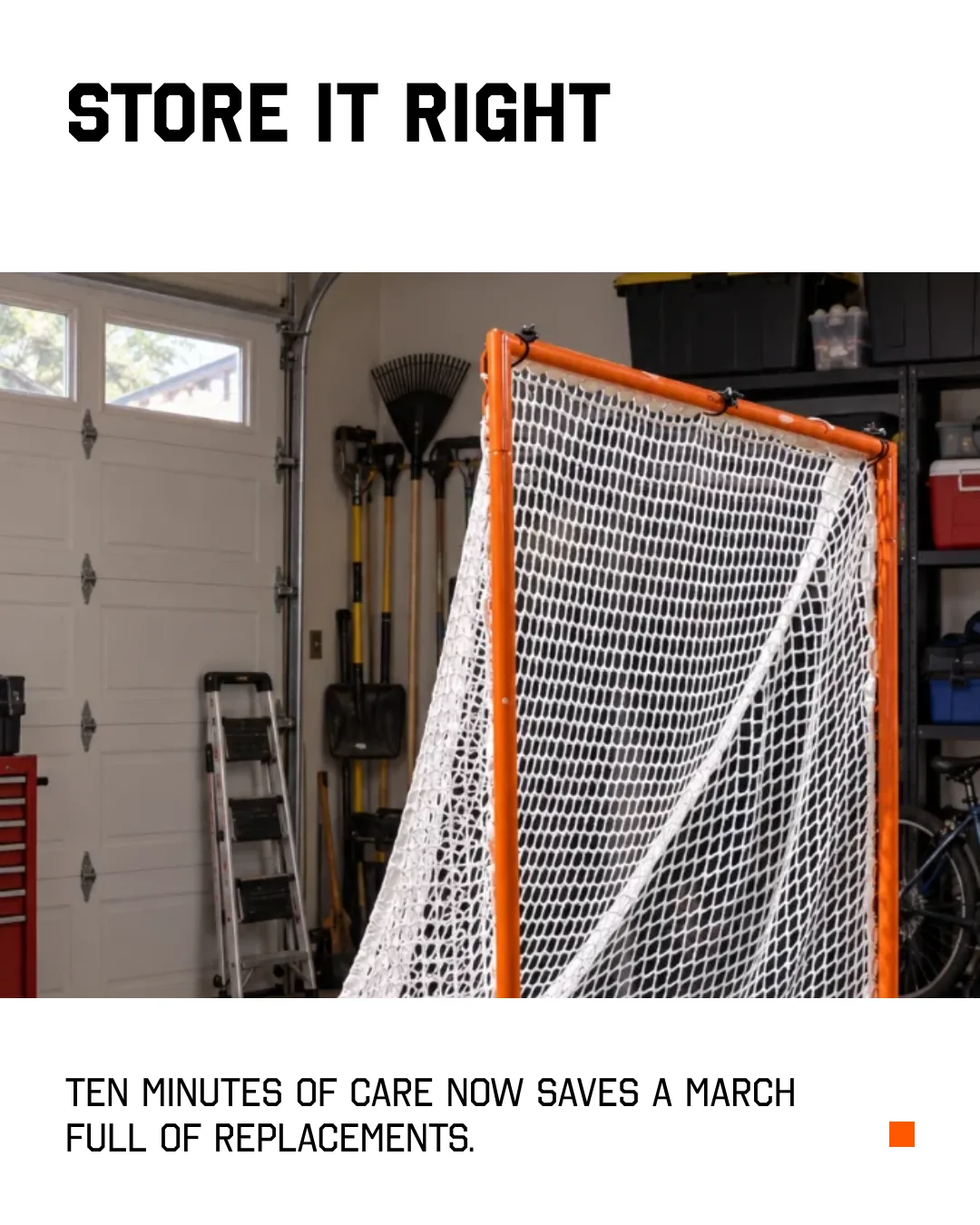
The outdoor season is wrapping up. The goal is still standing in the yard, there are balls in the grass, and the stick is wherever it got dropped on Sunday.
Here's the thing about the next four months: nothing in that sentence survives them well. Cold, wet, and UV do slow damage to lacrosse gear, and the damage doesn't show up in December. It shows up the first warm Saturday in March, when a net has gone brittle, a shaft has a bend in it, and a bucket of balls feels like glass.
Ten minutes, once, fixes almost all of it. Here's the routine.
The stick
Wipe it down and bring it inside.
Dirt and moisture left on a head and shaft over the winter is how you get corrosion at the screw and a pocket that never comes back. Thirty seconds with a dry rag handles it.
Store it flat or hanging. Never leaning in a cold corner.
A composite or alloy shaft left leaning against a garage wall for four months, through freeze and thaw cycles, can take a set — a slight bend that you won't notice until your player does. Flat on a shelf or hung on two hooks keeps it straight.
Dry the pocket, then leave it alone.
A mesh pocket that goes into storage wet dries unevenly and loses its shape. Let it air out fully indoors for a day before you put it away. A dry pocket holds its shape until spring with no maintenance at all.
If the pocket was already going soft at the end of the season, that's a March problem you can solve in November instead — restringing is a good winter project and a good thing for a player to learn to do themselves.
The net
This is where most of the actual money is lost, and it's the easiest one to get right.
If the goal is coming in: take the net off. Let it dry completely — fully, not mostly. Then store it loose in a bag or a bin with room, not crushed under something heavy. A net stored damp and compressed comes out stiff, misshapen, and sometimes mildewed.
If the cage stays out all winter: go look at it right now, before the first freeze. Check two places specifically.
The corners, where tension is highest and wear concentrates. And the low center, which takes the most shots and is usually the first section to thin.
If the mesh looks thin or feels chalky in either place, replace it now rather than in March. Here's why that matters: netting that's already degraded gets brittle in freezing weather, and brittle netting fails all at once, usually in the middle of the first good practice of the spring. Replacing a net in November costs the same as replacing it in March and saves you the lost weekend.
Quick reference on thickness — if you're replacing and your player has gotten stronger this year, size up. 4mm is fine for young players, 6mm and 7mm are what you want for anyone with a real shot.
The goal frame
Wipe it down. Especially where mud and grass clippings collect at the base.
Check the joints and the lacing rails. Loose hardware over the winter becomes a wobbly cage in the spring, and a missing lacing hook means the net never sits right again. Tighten what's loose, note what's missing, order it now.
Folding goals store flat and indoors. Take the ten minutes. A folded goal against a garage wall takes almost no space and comes out exactly as it went in.
Permanent practice goals that stay out just need a level spot and a look up — keep them clear of anything that drops branches under ice or snow load. A limb through a cage is a real and preventable way to lose a goal.
The balls
Bring the bucket in.
Lacrosse balls are solid rubber, and rubber left outdoors through a winter of UV, rain, freeze, and thaw breaks down at the surface. That's the slick, greasy feel on an old ball — oils migrating out of a compound that's degrading. A glazed ball won't hold in a pocket and won't work for wall ball.
Cold storage in a garage is fine. Balls that go through repeated freezing and thawing while sitting in standing water are the problem.
So: collect them, dry them, put the bucket on a shelf. It takes four minutes.
While you're at it, count them. A player doing real winter work needs two dozen, not six — and if the bucket is short, filling it now is the cheapest thing you'll buy all off-season.
The backstop
Clear the netting. Knock off leaves and standing water. Wet debris sitting in netting all winter is how you get rot and sagging.
Tighten the frame. A season of wind works hardware loose.
Then decide: drop or store. A backstop left standing in a winter storm is a sail. Either drop it flat for the season or fold it away entirely. The frames that fail are almost always the ones left upright through a wind event.
What to replace now instead of in March
The honest list, in order of how much grief it saves you:
Thinning net. Highest-value catch of this whole routine. Brittle mesh fails at the worst time.
Missing goal hardware. Small parts, long lead time, and nothing works without them.
A short ball bucket. Cheap, and it's the thing that determines whether winter reps actually happen.
A soft pocket. Winter is the right time to restring. Spring is not.
Ten minutes, once
That's the whole routine. Wipe, dry, check, store.
The players who show up in March with gear that works aren't luckier. Their family spent ten minutes in November.
March you says thank you.
If the check turned something up: replacement nets, balls, goals, and backstops.